
Resources · 9 min read
How to lose fat without losing muscle
Cutting too hard costs you the muscle you worked for. A handful of levers decide whether the weight you lose is fat: how fast you go, how much protein you eat, whether you keep lifting, and how you handle the parts of a diet that push back.
Go slower than you want to
In a study of elite athletes, those losing about 0.7% of bodyweight a week gained lean mass while cutting; those aiming for twice that pace held steady at best. Reviews of physique athletes land on roughly 0.5% to 1% a week.
The leaner you are, the slower you should go. With more fat to lose, around 1% a week is reasonable; once you are lean, about 0.5% protects muscle better. A meta-analysis found daily deficits beyond roughly 500 kcal began to undercut lean-mass gains, even when strength held up.
The calorie math is fuzzier than you've heard
The old rule that 3,500 kcal equals a pound of fat overstates how much you will lose over time. As you get lighter you burn less, and early weight loss includes water and stored carbohydrate, so the scale moves fast at first and slower later.
Treat any starting calorie target as a first guess. After two or three weeks, your weight trend tells you what your real deficit is, and that is the number worth adjusting from.
Eat more protein than you think
Protein matters most when food is scarce. In a controlled trial during a calorie deficit, people eating twice the standard recommendation lost noticeably less lean mass than those eating the standard amount; tripling it added nothing further.
A large meta-analysis put the point of diminishing returns around 1.6 g per kg of bodyweight per day for building muscle, with an upper range near 2.2 g. During a cut, lean lifters do better with more: around 2.3 to 3.1 g per kg of lean mass. Basing protein on lean mass, as Chisel does, keeps the target sensible for everyone, rather than inflating it for people carrying more fat.
Spread it out
Three or four protein-rich meals beat one big one. A review on protein timing suggests aiming for a decent serving at each meal, roughly 0.4 g per kg of bodyweight, across at least four meals to reach a high daily target. Protein-heavy meals also keep you fuller, which helps more than anything else on a diet.
Keep lifting heavy
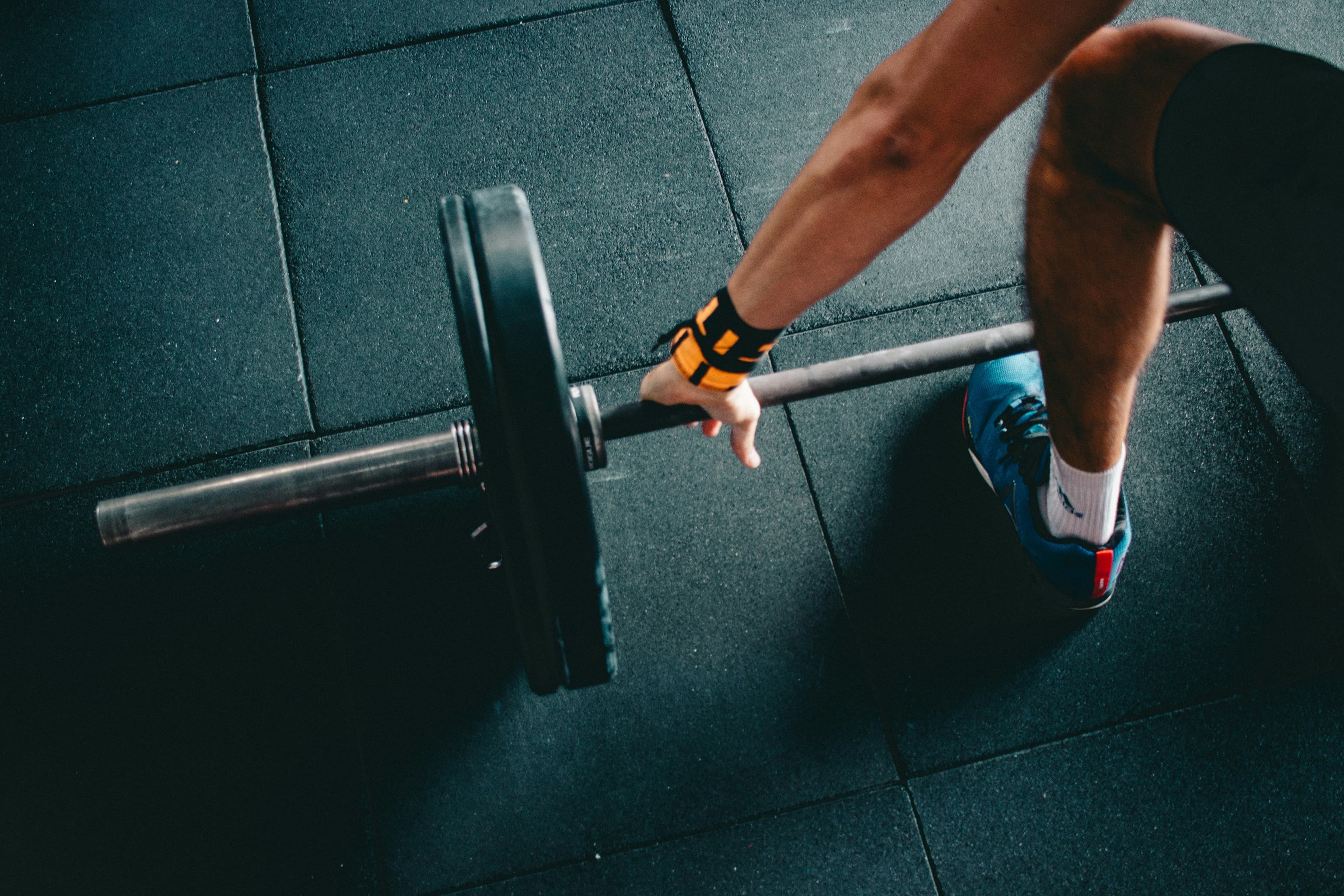
Training is the signal that tells your body the muscle is still needed. Keep the heavy compound lifts in your week while you cut. You may not set records, but holding your strength is the clearest sign you are holding your muscle.
The good news is that keeping muscle takes much less work than building it. In one study, people held on to the muscle they had built while doing a third of their previous training volume, as long as the weight stayed heavy. If a cut leaves you tired, trim sets before you trim the load.
Use cardio, don't let it use you
Cardio can widen the deficit without cutting more food, but too much of it can blunt muscle and strength gains. A meta-analysis found the interference grows with how often and how long the cardio is, and was larger for running than for cycling.
For most people, walking is the best tool: daily steps burn a surprising amount, cost almost no recovery, and help with hunger. Add a few cycling or rowing sessions if you enjoy them, ideally away from your leg days.
Don't strip out fat or carbs
Keep fat to at least about 20% of calories to support normal hormone function, and fill the rest with carbohydrate to fuel training. Extreme cuts to either tend to make training worse, which costs muscle.
Expect your body to push back
As a diet goes on, your body quietly saves energy. You burn a little less at rest, and, more noticeably, you move less without realising it: fewer steps, less fidgeting. Hunger rises too. This is normal, not a sign you are doing it wrong.
The fix is mostly to notice it. Keep your step count up on purpose, expect fat loss to slow a little in the later weeks, and adjust calories from your trend rather than panicking at a slow week.
Diet breaks can help
Planned stretches at maintenance calories, a week or two between blocks of dieting, have held up in research. In one trial, people who alternated two weeks of dieting with two weeks at maintenance lost more fat over the whole period. In resistance-trained people, a similar approach lost the same fat and kept the same muscle as a continuous diet, with less hunger along the way.
If a long cut is wearing you down, a planned week at maintenance is a reasonable tool, not a failure.
Sleep decides where the weight comes from
In one study, dieters on the same calories lost about half as much fat when they slept five and a half hours instead of eight and a half, and lost more lean mass instead. Short sleep also raises hunger. If you are cutting, protecting your sleep is part of the plan.
Watch the trend, not the scale
Daily weight swings with water, salt and food. Look at the weekly average, your waist measurement and your lifts. If the average is falling at the planned pace and your strength is holding, the weight you are losing is fat.
After the cut
When you reach your goal, raise calories back to maintenance in steps rather than all at once. Your weight will rise slightly as food and water refill your muscles; that is not fat. Keep the protein and the lifting, and you keep what you worked for.
Turn this into a plan
Pick the physique you want and Chisel builds the training and nutrition around it.
Sources
- Garthe et al., 2011. Effect of two different weight-loss rates on body composition and strength in elite athletes. Int J Sport Nutr Exerc Metab.
- Helms, Aragon & Fitschen, 2014. Evidence-based recommendations for natural bodybuilding contest preparation. J Int Soc Sports Nutr.
- Murphy & Koehler, 2022. Energy deficiency impairs resistance training gains in lean mass but not strength: a meta-analysis and meta-regression. Scand J Med Sci Sports.
- Hall et al., 2011. Quantification of the effect of energy imbalance on bodyweight. Lancet.
- Thomas et al., 2013. Why is the 3500 kcal per pound weight loss rule wrong? Int J Obes.
- Pasiakos et al., 2013. Effects of high-protein diets on fat-free mass and muscle protein synthesis following weight loss: a randomized controlled trial. FASEB J.
- Morton et al., 2018. A systematic review, meta-analysis and meta-regression of the effect of protein supplementation on resistance training-induced gains in muscle mass and strength. Br J Sports Med.
- Schoenfeld & Aragon, 2018. How much protein can the body use in a single meal for muscle-building? J Int Soc Sports Nutr.
- Bickel, Cross & Bamman, 2011. Exercise dosing to retain resistance training adaptations in young and older adults. Med Sci Sports Exerc.
- Wilson et al., 2012. Concurrent training: a meta-analysis examining interference of aerobic and resistance exercises. J Strength Cond Res.
- Trexler, Smith-Ryan & Norton, 2014. Metabolic adaptation to weight loss: implications for the athlete. J Int Soc Sports Nutr.
- Byrne et al., 2018. Intermittent energy restriction improves weight loss efficiency in obese men: the MATADOR study. Int J Obes.
- Peos et al., 2021. Continuous versus intermittent dieting for fat loss and fat-free mass retention in resistance-trained adults: the ICECAP trial. Med Sci Sports Exerc.
- Nedeltcheva et al., 2010. Insufficient sleep undermines dietary efforts to reduce adiposity. Ann Intern Med.
General information, not medical advice. Check with a doctor before changing your diet or training if you have a health condition.